

How to Buy Authentic Antiques in India: A Beginner's Guide

There's something quietly magical about owning a piece of history. A hand-etched brass pitcher that once sat in someone's courtyard. A porcelain vase that survived generations of hands, moves, and monsoons. But if you're just starting out, one question comes up again and again: how do you actually buy authentic antiques in India without ending up with a well-aged fake?
It's a fair worry. India's antique market is huge, colourful, and - let's be honest - a little chaotic. Alongside genuine heirlooms and centuries-old craftsmanship, you'll also find plenty of "distressed" reproductions dressed up to look older than they are. The good news? You don't need to be an appraiser to shop smart. You just need to know what to look for, who to trust, and where to start. That's exactly what this guide is here to help with.
What Counts as an "Antique" in India?
Before you start hunting, it helps to know what you're actually hunting for. Globally, the general rule of thumb is that an item needs to be at least 100 years old to be called a true antique. Anything younger - but still old enough to carry character and craftsmanship - usually falls under "vintage" instead.
In the Indian context, this line gets a little more interesting. Because of the country's long, layered history of trade, royal patronage, and regional artistry, you'll come across genuinely old pieces from multiple traditions - Mughal metalwork, Kashmiri enamelling, colonial-era furniture, tribal sculpture, and imported Chinese porcelain that made its way here through old trade routes. Knowing roughly which category a piece belongs to is the first step before you even think about buying.
5 Signs to Check Before You Buy
 If you're wondering how to identify genuine antiques, the honest answer is: it's rarely just one clue. It's a combination of small details that, together, tell a consistent story. Here's what experienced collectors look for.
1. Patina, not paint. Genuine age leaves behind a soft, uneven sheen - on wood, it's a warm, deepened glow; on brass or bronze, it's a gentle darkening in the grooves and corners. This happens naturally over decades of handling, cleaning, and exposure. A fake "antique finish" usually looks flat, evenly applied, and just a bit too perfect.
2. Honest wear in logical places. A brass aftaba that's been used for years should show more wear near the handle and spout than on its body. A carved wooden panel should be smoother where hands have touched it most. If the wear looks randomly scattered or suspiciously uniform, that's a red flag.
3. Handcrafted irregularities. Before machines took over, everything was shaped by hand - and hands aren't perfectly consistent. Look for slight asymmetries in hand-etched patterns, minor variations in hand-painted motifs, or tool marks that don't quite repeat themselves. These "imperfections" are often the clearest signs of authenticity.
4. Weight and material feel. Reproductions often cut costs with lighter alloys or thinner materials. A genuine antique brass piece, stone sculpture, or porcelain vase usually has a certain heft and density that's hard to fake convincingly.
5. A story that adds up. The materials, craftsmanship style, and condition should all point to the same era and origin. If a "19th-century" piece has suspiciously modern fittings or machine-perfect symmetry, something doesn't line up.
Quick Authenticity Checklist
|
What to Check |
Signs of the Real Thing |
Red Flags |
|
Surface & Patina |
Soft, uneven sheen developed over time |
Flat, evenly applied "aged" look |
|
Wear Patterns |
Concentrated in handles, edges, high-touch spots |
Uniform or randomly placed wear |
|
Craftsmanship |
Slight hand-made irregularities |
Machine-perfect symmetry throughout |
|
Weight & Material |
Substantial, period-appropriate materials |
Unusually light or synthetic-feeling |
|
Overall Story |
Style, material, and age all align |
Mismatched era clues or details |
Keep this table handy the next time you're evaluating a piece in person — it takes less than two minutes to run through and can save you from a costly mistake.
Why Provenance & Documentation Matter
Once a piece passes the physical checks, the next layer of trust comes from paperwork. Provenance simply means the documented history of an item - where it came from, who owned it, and how it made its way to the seller. A well-documented piece isn't just easier to trust; it's also generally more valuable if you ever decide to sell or pass it on.
Reputable sellers will often provide some form of authenticity documentation, background on the piece's origin, or at least a transparent explanation of its sourcing. If a seller can't (or won't) answer basic questions about where a piece came from, treat that as a signal to slow down. This is one of the reasons an authenticity guarantee from the seller matters so much - it shifts some of that responsibility from your gut instinct to their accountability.
How to Choose a Trustworthy Antique Dealer in India
This might be the single most important decision in the entire process. Even with a sharp eye, most beginners rely heavily on the seller's honesty - which is exactly why picking the right one matters so much.
A few things worth checking before you buy from any antique shop in India, online or offline:
-
Track record and reviews. Look for sellers with a genuine history — not just glowing testimonials, but real detail about sourcing, packaging, and after-sale support.
-
Transparency about restoration. Almost every antique has been touched up or repaired at some point. A trustworthy dealer will tell you what's original and what's been restored, rather than letting you assume everything is untouched.
-
Return and authenticity policies. A seller confident in their pieces will usually stand behind them with a clear return or authenticity policy. Vague or missing policies are worth questioning.
-
Physical presence. Where possible, an online Indian antique store with an actual storefront (not just a website) adds a layer of accountability — you can visit, ask questions in person, and see pieces up close before committing.
Take your time here. A little research on the dealer often matters more than any single physical test you can run on the object itself.
Popular Categories to Start Collecting
 If you're new to this world, it helps to start with categories that are relatively easier to evaluate and widely available from credible sources. Some popular starting points include:
-
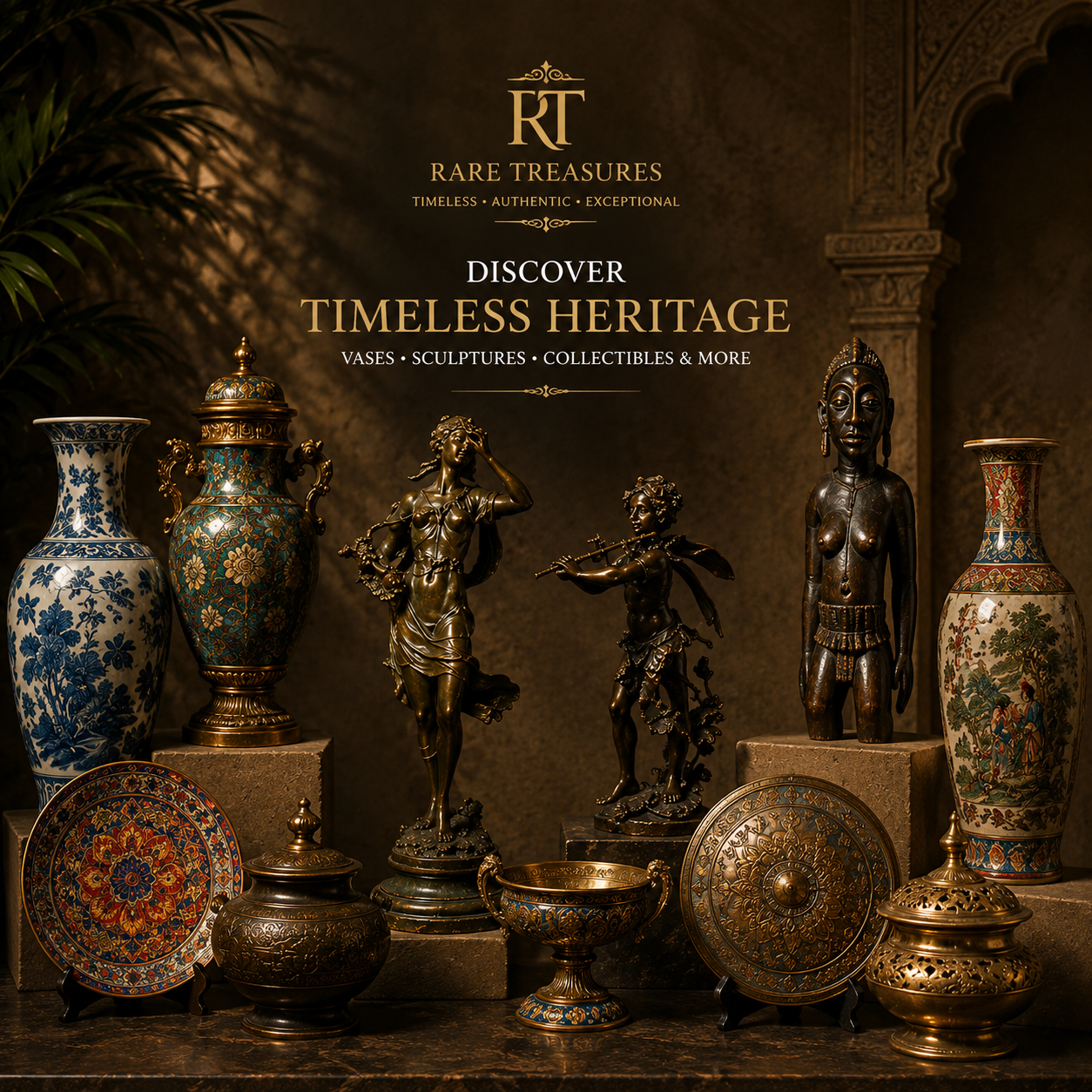
Antique vases - Chinese porcelain, hand-painted ceramics, and regional pottery are visually stunning and a great entry point into collecting.
-
Brass aftabas and pitchers - Especially Kashmiri and Mughal-style pieces, known for intricate hand-etched patterns and enamel work.
-
Bronze and stone sculptures - A category rich in craftsmanship, often reflecting religious, tribal, or classical artistic traditions.
-
Carpets and rugs - Hand-knotted pieces with natural dyes and age-appropriate wear tend to hold both aesthetic and monetary value.
-
Paintings, portraits, and masks - Wonderful for those drawn to storytelling pieces with cultural or regional significance.
Together, these form the backbone of most vintage and antique home décor India collections, and they're a great place to build your eye before moving into more specialised or expensive categories. If you're specifically drawn to sculptural pieces, look for sellers who focus on authentic antique sculptures and vases with clear sourcing — the detailing and material quality tend to vary a lot between genuine and reproduction pieces in this category.
Caring for Your Antique After Purchase
Buying the piece is only half the journey - keeping it in good condition is just as important, especially in India's varying humidity and temperature conditions.
-
Avoid direct sunlight for painted, wooden, or textile pieces, as prolonged exposure can fade colours and dry out materials.
-
Dust gently and regularly using soft, dry cloths — avoid harsh chemical cleaners on metal or painted surfaces, which can strip natural patina.
-
Control humidity where possible, particularly for wood and paper-based antiques, since moisture is one of the biggest long-term threats to preservation.
A little routine care goes a long way in preserving both the beauty and the value of your collection for years to come.
Final Thoughts
Learning to buy authentic antiques in India isn't about becoming an expert overnight — it's about slowing down, asking the right questions, and trusting sellers who are transparent about what they're selling and where it came from. With a bit of patience and the checklist above, you'll find that spotting the real from the reproduction gets easier with every piece you evaluate.
If you're ready to start (or grow) your collection, explore our curated range of vases, sculptures, aftabas, and more — every piece is sourced with authenticity and craftsmanship in mind, backed by our own authenticity guarantee. And if you'd rather see and feel a piece before you decide, you're always welcome to visit us at our Rajpur Road store in Dehradun.
FAQs
 Q1. Is it legal to buy antiques in India?
Yes, but items over 100 years old fall under the Antiquities Act and may need documentation for resale or export.
Q2. What's the difference between antique and vintage?
Antiques are 100+ years old; vintage items are typically 20–99 years old. Both can be collectible.
Q3. How can I tell if an antique is genuine?
Check patina, wear patterns, weight, and craftsmanship irregularities. A consistent "story" usually confirms authenticity.
Q4. Do antiques come with authenticity certificates?
Not always, but trustworthy sellers offer documentation or an authenticity guarantee for their pieces.
Q5. Where can I buy authentic antiques in India?
Choose reputable dealers with transparent sourcing, clear return policies, and a genuine physical or online presence.
Q6. Are restored antiques still considered authentic?
Yes, if the seller discloses what was restored. Most antiques have some repair work over time.
Q7. What's the best way to start an antique collection?
Begin with accessible categories like vases, brass pitchers, or sculptures from a trusted seller.
Q8. Why do antique prices vary so much?
Rarity, condition, provenance, and craftsmanship all affect value, even for similar-looking pieces.
Q9. Can I export antiques purchased in India?
Generally yes, but pieces over 100 years old may need clearance under Indian antiquity export rules.
Q10. How should I care for antiques at home?
Keep them away from direct sunlight, dust gently, and control humidity to prevent long-term damage.